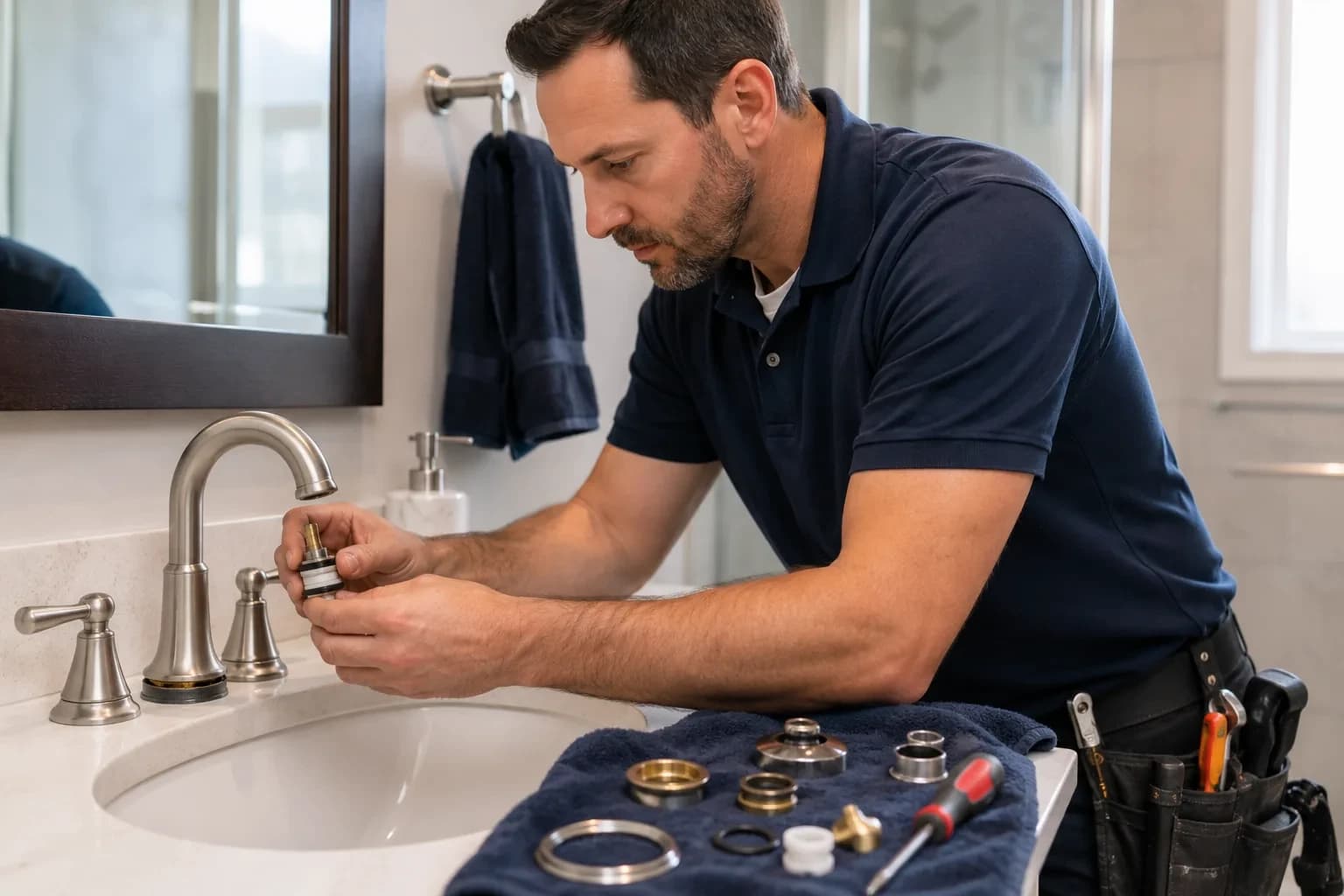
What Does It Cost to Fix a Leaky Faucet?
4 min read
Short answer
A leaking faucet is one of the lower-cost plumbing repairs, and it is priced by the job rather than an open-ended hourly rate. Most leaks trace to a worn washer, O-ring, or cartridge — inexpensive parts that a plumber replaces in a single visit. The cost rises only if the valve body or the supply line beneath the sink has corroded, which a quick on-site look establishes before any work starts.
A dripping tap feels too small to call anyone about, which is exactly why it gets left. It is worth knowing what the fix actually involves, because the delay usually costs more than the repair.
Why It Leaks in the First Place
Nearly all faucet leaks come down to a small number of worn parts rather than anything dramatic.
- A worn rubber washer or O-ring — the most common cause on older compression taps
- A failed cartridge — the usual cause on single-lever mixer taps
- A corroded valve seat, where hard water has degraded the sealing surface
- A loose or failed supply-line connection beneath the sink, rather than the tap itself
Why We Price It by the Job
An hourly rate on a small repair gives the customer no certainty and gives the plumber no incentive to be quick. A fixed price for the job removes both problems.
We look at the tap, tell you what it needs, and give you a price for that work. If the tap turns out to be worth replacing rather than repairing, you get both figures and choose.
Repair or Replace the Tap?
Repair is normally the better value on a decent-quality tap where a washer or cartridge has worn. The parts are cheap and the fitting is sound.
Replacement makes more sense when the tap is a low-cost unit already, when the finish has corroded, or when the valve body itself is worn — at which point you are repairing something that will need doing again shortly.
What a Slow Drip Actually Costs You
A steady drip wastes a genuinely surprising volume of water over a year, and it shows up on the bill long before anyone connects the two.
The larger risk is what the moisture does around it. A slow leak under a sink keeps the cabinet base damp, and in Georgia's humidity that leads to mold and swollen cabinetry — repairs that cost considerably more than the washer that caused them.
Frequently Asked Questions
- Is a dripping tap worth calling a plumber for?
- Yes, if you are not comfortable replacing a cartridge yourself. It is a low-cost repair, and leaving it risks damage to the cabinet and fittings around it that costs far more.
- Can I fix a leaking faucet myself?
- Replacing a washer or cartridge is within reach for many people, provided you shut off the supply first and can identify the correct replacement part for the model.
- What if the leak is under the sink rather than at the tap?
- That usually points to a supply-line connection or the drain trap rather than the faucet. Both are straightforward to fix, but a leak inside a cabinet does more damage unseen — worth acting on promptly.