Should You Repair or Replace Your Water Heater?
6 min read
Short answer
The decision comes down to two things: the age of the unit and whether a part failed or the tank failed. Under roughly 8 to 10 years old with a failed thermostat, heating element, or pilot assembly, repair is almost always cheaper. Past 10 to 12 years, or any time the tank itself is leaking, replacement usually costs less over time — a leaking tank cannot be repaired, only replaced.
This is the most common question we get about water heaters, and the honest answer does not require a technician to be standing in your basement. Two factors decide it most of the time.
Factor One: How Old Is the Unit?
A standard tank water heater is designed for roughly 8 to 12 years of service. A tankless unit often reaches 15 to 20 with regular descaling.
Under 8 years, repair is nearly always the right call. Between 8 and 12, it depends on what failed. Past 12, you are on borrowed time regardless of what broke, and money spent on repairs is money spent on a unit that will need replacing shortly anyway.
If you do not know the age, look for the manufacturer sticker on the side of the tank — the serial number usually encodes the manufacture date.
Factor Two: Did a Part Fail, or Did the Tank?
This is the one that settles most cases. Parts are replaceable; tanks are not.
- Thermostat, heating element, pilot assembly, gas control valve — all repairable
- Anode rod worn out — replaceable, and worth doing to extend tank life
- Sediment buildup causing noise and poor output — often fixed by a flush
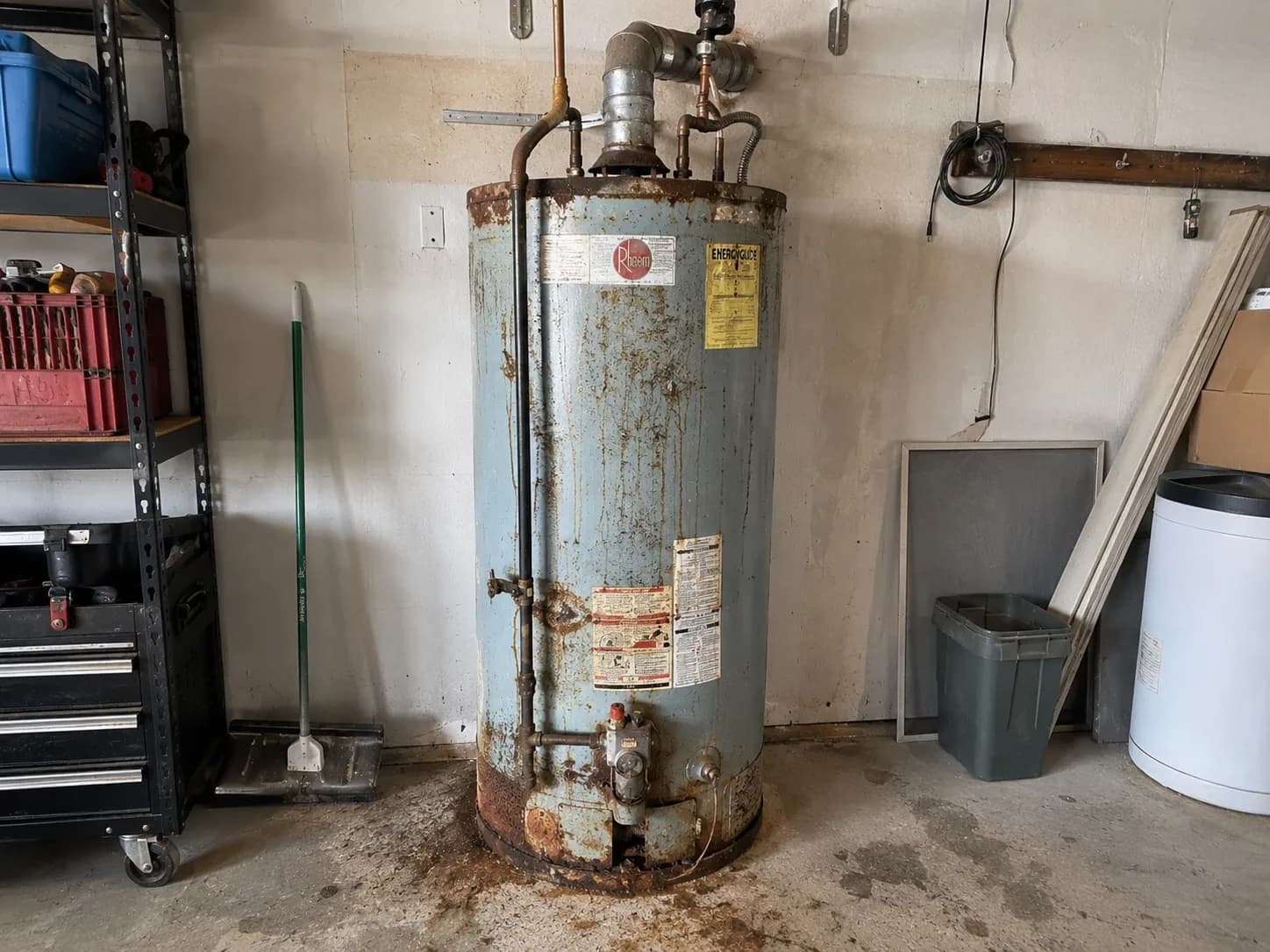
- Water pooling from the tank body itself — not repairable, the unit needs replacing
The Repeated-Repair Trap
If you are calling someone out more than once a year, the arithmetic has already turned against repair even if each individual visit looks cheap.
We price both options side by side in writing after a diagnostic visit, so you can see the repair cost and the replacement cost together rather than agreeing to one without knowing the other.
What a Leaking Tank Actually Means
Water pooling around the base is the one symptom that ends the conversation. Once the tank has corroded through, no repair puts it back — and the failure tends to accelerate.
If you see standing water around the unit, shut off the water supply valve above it and treat it as urgent. A tank that is weeping today can let go entirely, and the resulting damage costs considerably more than the heater did.
Frequently Asked Questions
- Is it worth repairing a 10-year-old water heater?
- It depends on what failed. A thermostat or element on an otherwise sound 10-year-old tank can be worth fixing. A gas control valve or any tank leak at that age generally is not.
- Can a water heater last 20 years?
- A well-maintained tankless unit can. A standard tank reaching 20 years is uncommon and usually means unusually soft water and diligent annual flushing.
- Does homeowners insurance cover it?
- Wear-and-tear failure is typically excluded, though sudden accidental damage such as a burst tank causing water damage sometimes is covered. Confirm the specifics with your own insurer.